




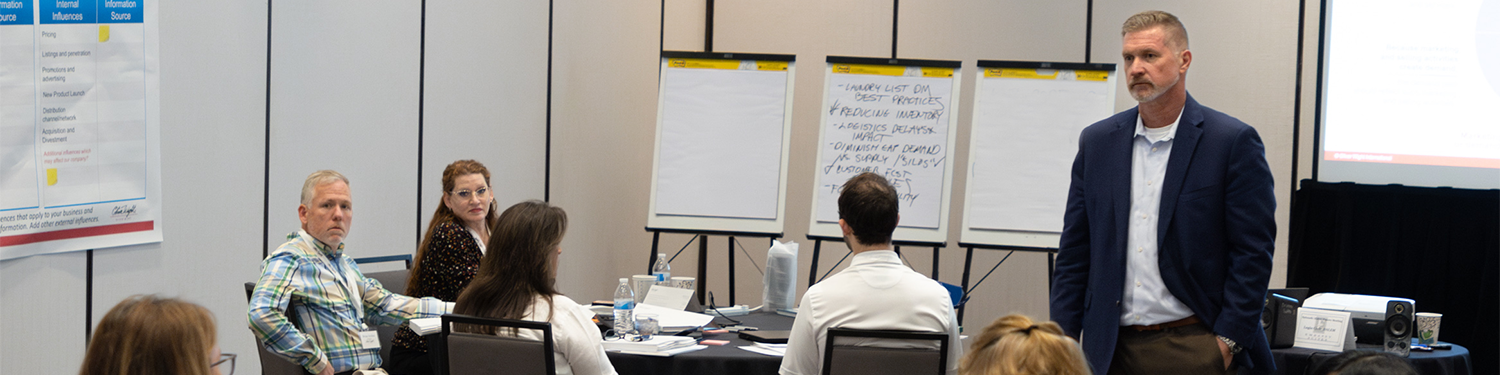

Demand Management Course
Why is our demand plan, or forecast, constantly criticized? Why are we unable to reduce bias and improve demand plan, or forecast, accuracy?
For more than 25 years, companies have sent planners and managers to this course to learn the best practice fundamentals of demand management.
Participants gain an understanding of what it takes to develop more credible demand plans. They learn how to engage the commercial organization in developing the demand plan. They are also introduced to the concept of being trusted advisors to the senior leadership team.
What Is the Demand Management Course
This course takes participants through the fundamentals of every step of a best practice demand management and planning process. It also addresses developing a demand plan and presenting it to sales and marketing leaders in a Demand Review. This course emphasizes only practical, applied concepts that can immediately be put to use to improve a demand management process.
What You Learn
The instructors led the demand management and planning processes in companies prior to joining Oliver Wight. They know what it takes to create demand plans every month and present them in a Demand Review. They understand the hurdles that need to be overcome to improve the credibility of those plans.
Participants will learn:
- Best practices that companies are applying in industry today
- A perspective on broad demand management techniques and success drivers
- Common roles, responsibilities, and accountabilities in a best practice process
- How to identify gaps in the participants’ process, tools, and people capabilities compared to best practices
- Typical process flows involving inputs, outputs, communications, and decision making
- Planning techniques that address volume and timing of demand at different points in a planning horizon
- An approach for improving the participants’ demand planning and management process

Instructors:
Timm Reiher Todd Ferguson Charity Lopez



Value of the Demand Management Course
Business performance improves when companies develop credible demand plans that are trusted throughout the organization. The Sales team is much more likely to achieve their goals. There is also less “firefighting” to respond to customer orders, and on-time delivery performance improves. Less safety inventory is needed to support unplanned orders. As a result, sales revenue increases and margins improve.
Class Details
Who Should Attend:
- New demand planners, forecasters, and managers
- Experienced demand planners and managers looking for an update on best practices
- Senior level sales and marketing executives and managers.
- Account and sales managers
- Sales operations managers
- Customer service managers
- Anyone who works in a supply chain role, particularly supply planning
- Anyone wanting to understand how a best practice demand planning process should operate
- Someone investigating demand planning as a career move